
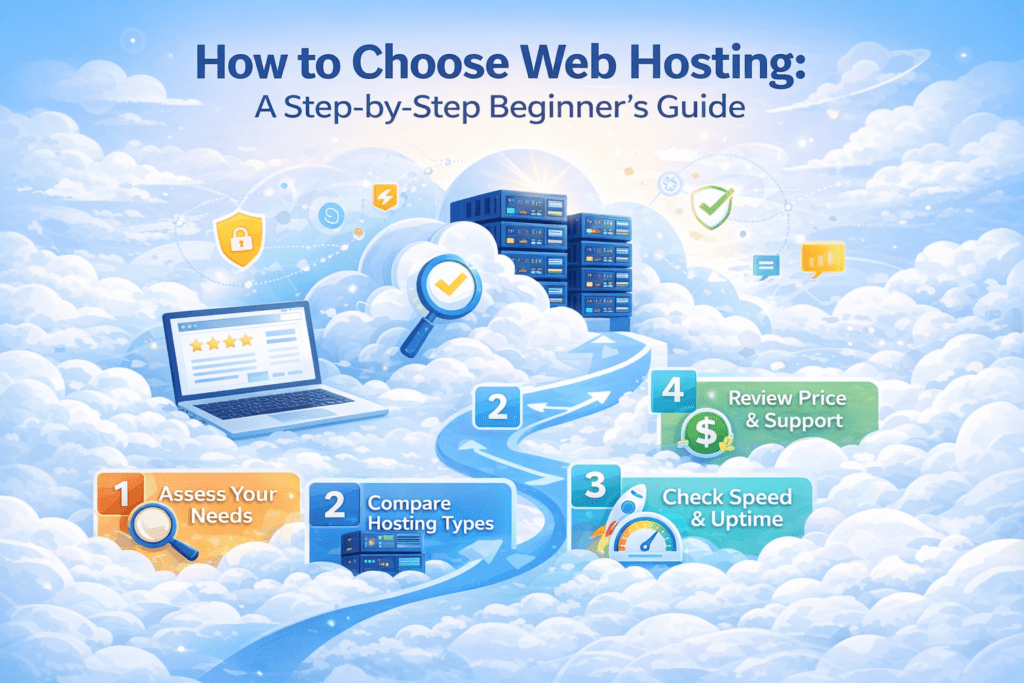
Choosing the right web hosting provider is one of the most important decisions you will make when building a website. Your hosting affects speed, uptime, security, and even your search engine rankings.
For beginners, the process can feel overwhelming. There are dozens of providers, hundreds of plans, and technical terms that are not always clearly explained.
This step-by-step guide will help you understand what truly matters so you can choose web hosting with confidence.
Step 1: Understand What Your Website Actually Needs
Before comparing hosting providers, ask yourself a few simple questions:
Is this a personal blog, business site, or online store?
How much traffic do I expect in the first year?
Will I upload heavy media files like videos?
Do I need email hosting?
Most beginners overestimate their needs. If you are launching a small blog or informational website, you likely do not need advanced hosting right away.
Starting with the right level prevents unnecessary costs and technical complications.
Step 2: Choose the Right Type of Hosting
There are several common types of hosting:
Shared Hosting
Your website shares server resources with other websites.
Best for beginners and small websites.
Affordable and easy to manage.
VPS Hosting
Provides more dedicated resources.
Better for growing websites with moderate traffic.
Requires more technical understanding.
Cloud Hosting
Uses multiple interconnected servers.
Offers scalability and improved reliability.
Ideal for businesses expecting traffic growth.
Dedicated Hosting
A full physical server for your website.
Best for large enterprises with high traffic.
For most beginners, shared hosting or entry-level cloud hosting is more than sufficient.
Step 3: Check Performance and Speed
Website speed affects:
User experience
Bounce rate
Search engine rankings
Read more :
Shared vs VPS vs Cloud Hosting: Key Differences, Pros, Cons, and Which One You Should Choose (A Complete Beginner’s Guide)
When evaluating hosting providers, look for:
SSD storage
Modern server technology
Data center locations near your target audience
Performance guarantees
Fast hosting improves both visitor satisfaction and long-term growth.
Step 4: Look at Uptime and Reliability
Uptime measures how often your website stays online.
A good hosting provider should offer at least:
99.9% uptime guarantee
Frequent downtime can damage credibility and reduce traffic. Reliable infrastructure ensures visitors can access your website at any time.
Step 5: Evaluate Scalability Options
Your hosting should grow with your website.
Look for:
Easy upgrade paths
Flexible resource scaling
Clear plan differences
Switching hosting providers later can be time-consuming. Choosing a scalable solution from the start saves effort in the future.
Step 6: Review Security Features
Security is often overlooked by beginners.
Important security features include:
Free SSL certificate
Regular backups
Malware scanning
Firewall protection
Even small websites need basic protection.
Step 7: Compare Pricing Carefully
Low introductory pricing can be attractive, but pay attention to:
Renewal rates
Contract length
Hidden fees
Understand exactly what is included in each plan. The cheapest option is not always the best long-term value.
Step 8: Test Customer Support
Customer support becomes critical when problems arise.
Before choosing a provider, check:
Live chat availability
Response time
Knowledge base quality
Responsive support can save hours of frustration.
Common Mistakes to Avoid
Many beginners make these mistakes:
Choosing based only on price
Ignoring renewal costs
Buying more resources than needed
Not checking upgrade options
Skipping research
Taking time to compare options prevents future headaches.
Final Thoughts
Choosing web hosting does not need to be complicated. When you understand your website’s needs, compare performance factors, and evaluate scalability and security, the decision becomes much clearer.
Start simple, focus on reliability and performance, and choose a hosting plan that can grow with you.
Making an informed decision today will support your website’s stability and long-term success.